The Speed Comes From Understanding – Draw Loose
Learn why speed in drawing comes from understanding your subject first, then simplifying it into loose, expressive sketches.
If you think drawing loose is just about being fast, it’s not.
Speed comes from understanding.
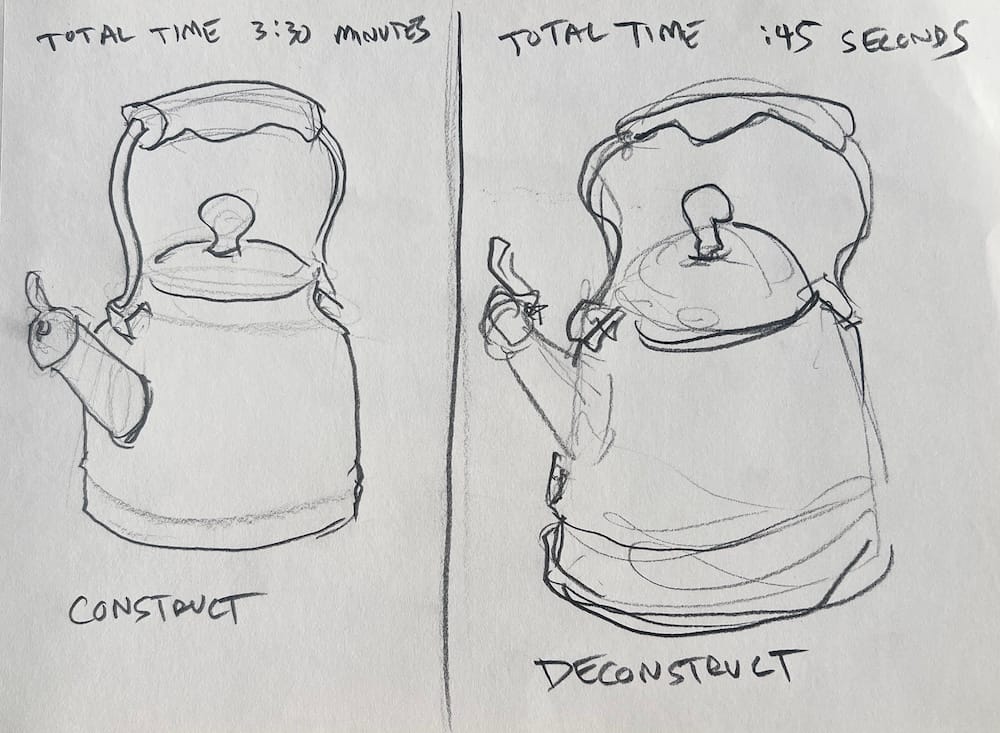
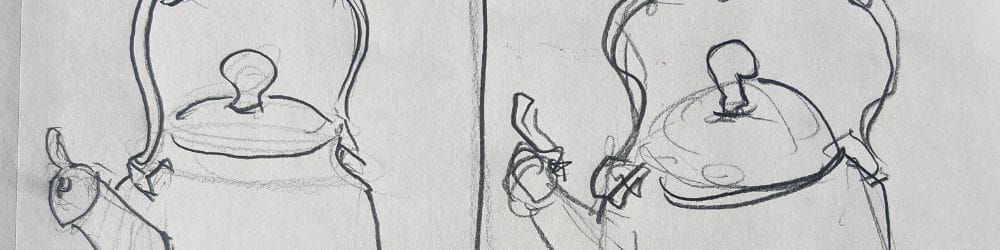
In this study, I take a slightly more complex subject—a tea kettle—and approach it in two stages. The first pass is slower and more deliberate. I’m building the structure, working out proportions, and getting a feel for how the parts connect.
It’s not about making a perfect drawing. It’s about making sense of what you’re looking at.
Then I draw it again—this time faster.
But I’m not guessing.
The second pass works because the first one did the heavy lifting. I already understand the form, so I can simplify, exaggerate, and respond instead of trying to control every line.
What This Study Teaches
- Why speed is built on understanding, not shortcuts
- How to break down more complex subjects into simple forms
- Using a second pass to simplify and loosen your drawing
- Moving from observation to expression
Why This Works
If you skip the foundation, you’re guessing.
When you take the time to construct your subject first, you build clarity. That clarity carries into the next pass, allowing you to draw faster without losing structure.
That’s where real looseness comes from.
This is the core idea behind everything I teach:
construct → deconstruct
This Is Just The Beginning
Join my Deconstruction Lab on Patreon to go deeper, or explore my full drawing courses for complete step-by-step training.
Or if you’d rather binge full courses, I’ve got those ready too.