Gesture Figure Drawing Study – Capturing Movement and Weight
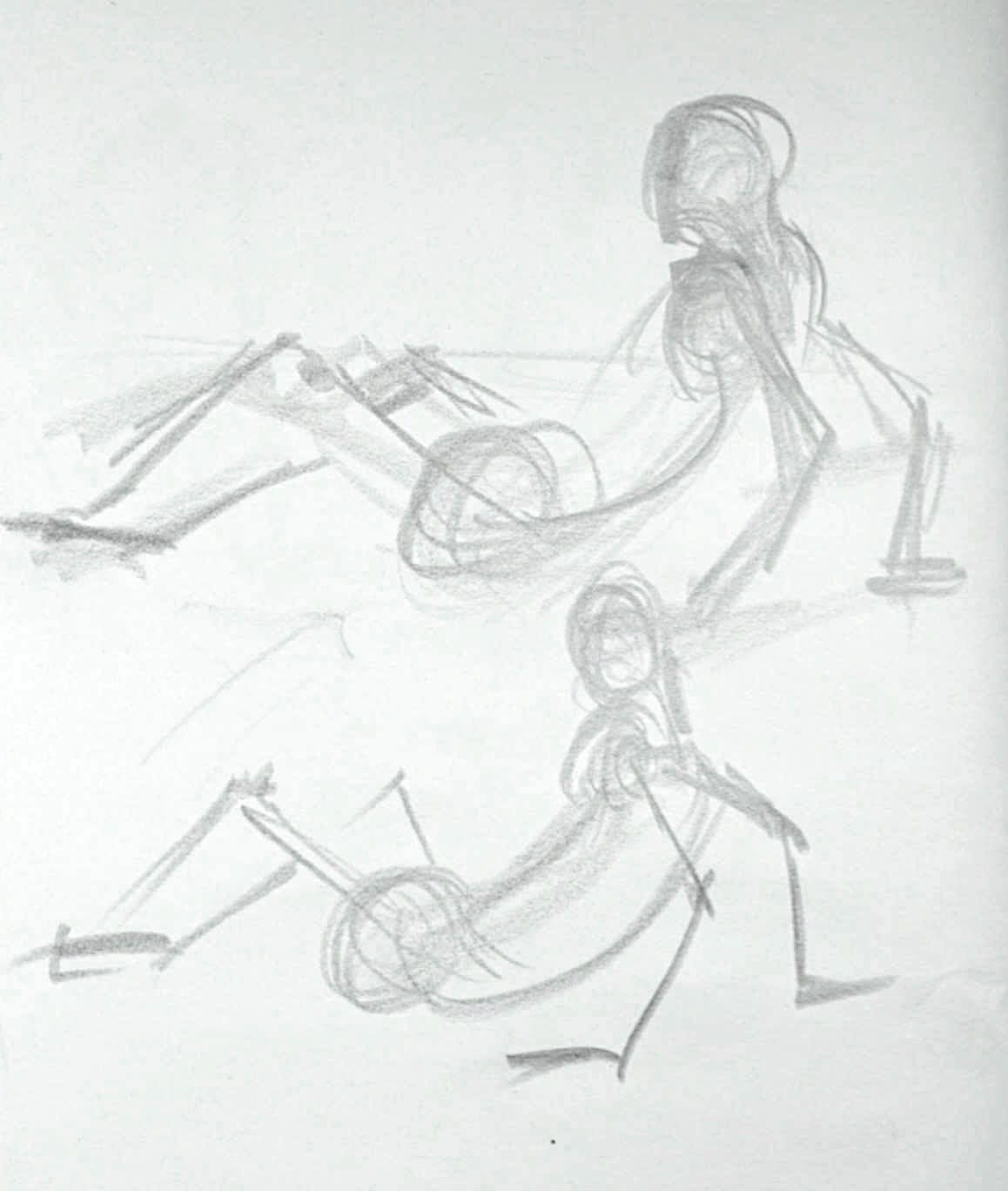
A gesture figure drawing study focused on capturing movement, balance, and weight using simple shapes and flowing lines.

Gesture drawing is about more than copying what you see — it’s about feeling the pose. In this seated figure study, the goal is to capture movement, balance, and the effect of gravity on the body using simple shapes and flowing lines. Instead of getting lost in anatomy or details, this approach focuses on structure, rhythm, and energy.
This exercise is perfect for artists who want to loosen up their figure drawings while building a stronger foundation for proportion and pose.
Start With the Force of the Pose
Before drawing, take a moment to imagine yourself in the figure’s position. Where does the weight rest? Which parts of the body feel compressed or stretched? In this seated pose, the spine curves naturally, the shoulders lift unevenly, and the head pushes slightly forward. Starting with a simple C-curve through the spine helps establish this sense of weight right away.
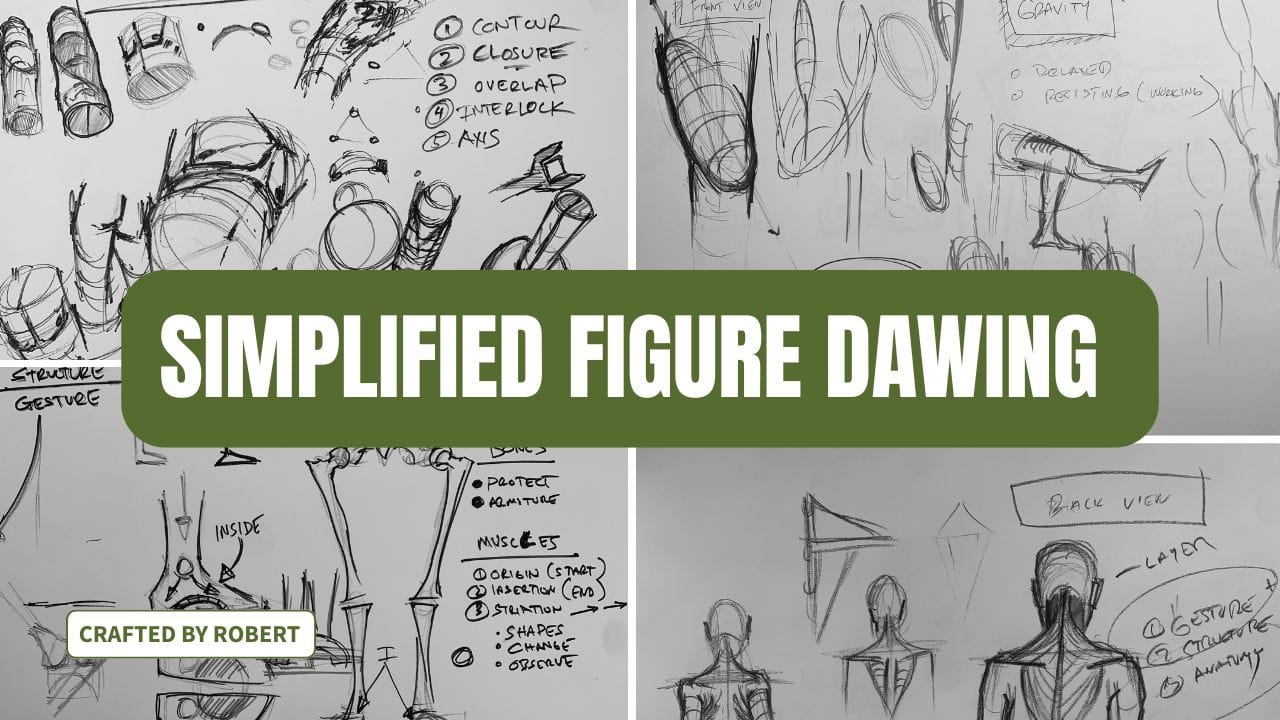
Simplified Figure Drawing Course
Learn how to draw the human figure using simple shapes and clear structure. A step-by-step course designed to help you simplify anatomy and draw with confidence.
Simplify With Basic Shapes
Once the main flow is established, block in the hips, shoulders, knees, and elbows using circles and simple lines. Comparing landmarks — such as the relationship between knees and shoulders — helps keep proportions believable, even when limbs are foreshortened or partially hidden.
Repeat Using Different Methods
Try drawing the same pose multiple times using different approaches, such as gesture lines or an eight-part body breakdown. Repetition builds confidence and trains your eye to see structure instead of surface detail.
Gesture drawing like this strengthens your ability to draw figures that feel alive, balanced, and natural.